I’m a sucker for direct reprogramming technology and find myself looking out for papers on the subject. In this particular reprogramming process, which more often used to be called transdifferentiation, one at least partially differentiated cell type is directly changed into one. There’s no intermediate step of IPS cell formation. So, a typical example of direct reprogramming would be making neurons or neural precursors from skin fibroblasts.

There’s a new paper on direct reprogramming, but before we dive into that, I’ve got a new, short YouTube video with a quick overview of the first 6 months or so of the new FDA. Check it out below and please subscribe to that channel. The agency has been so chaotic with many decisions seemingly driven by politics.
This was a crazy busy week for me and the first time in awhile I didn’t post during the week here on The Niche.
Direct reprogramming or transdifferentiation
Here’s the new direct reprogramming paper. Direct reprogramming of mouse fibroblasts into self-renewable alveolar epithelial-like cells, npj Regenerative Medicine. One advantage of direct reprogramming is it is simpler. The cocktail here to make specific respiratory cells included Nkx2-1, Foxa1, Foxa2, and Gata6.
More recommended reads including new reproductive research
- In vivo genome editing of human haematopoietic stem cells for treatment of blood disorders using mRNA delivery, Nat. Biomed Engin. In vivo editing with mRNA is very cool. Of course, “mRNA” has gotten a weird, bad rap from some folks, who maybe don’t realize that they themselves are full of mRNA.
- Japan’s green light for making human embryos from stem cells takes us into uncharted territory, STAT. This is about the latest step toward making human babies from stem cells via IVG. I call the overall process “stem cell IVF”.
- Fertility startup Gameto raises $44M to fund Phase 3 study of stem cell IVF therapy, Endpoints. I’ve written before about Gameto. Human reproductive startups are getting more attention.
- Maryland’s stem cell research fund is filling the gap, Technical.ly. The same can be said for CIRM here in California.
- REST/NRSF Preserves muscle stem cell identity by repressing alternate cell fate, Nat. Comm.
- Duke scientists seemed to have developed a ‘Holy Grail’ of cancer treatment. Then the truth came out, STAT. This one is depressing about how much harm can come from a combination of someone faking stuff and a university administration that doesn’t handle it well.
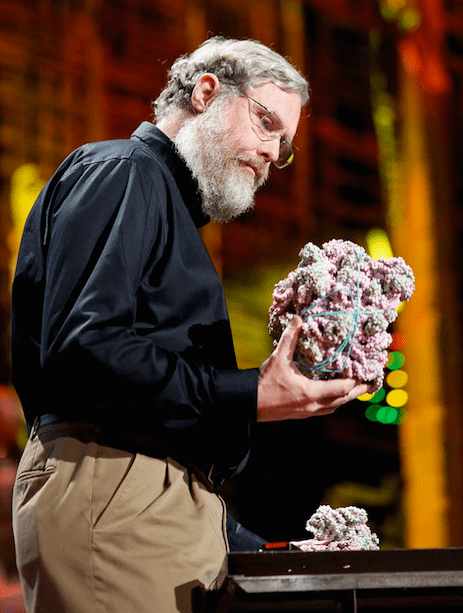
Blast from the past: classic George Church interview on heritable human CRISPR.
George Church on Germline Human Genetic Modification.One of the things I still find most astounding about my interview with Church is his chart of possible human alleles to target with CRISPR and the associated traits.
I’m not even sure that restoring cartilage into an arthritic joint is truly the gold standard at least in terms of alleviating arthritic pain. That’s what has been explained to me at the “Stem Cell Clinic” that I’ve been frequenting since about 2014. In other words, there is a difference between the medical condition or disease of osteo arthritis, the result of cartilage loss, versus the apparent consequent pain of that condition. https://pmc.ncbi.nlm.nih.gov/articles/PMC10406023/
My understanding is that not everybody who loses cartilage is going to experience pain the result of that cartilage loss or at least at the same level as another person. Some can experience a lot of cartilage loss and consequently little pain, while others can lose a little bit of cartilage and experience tremendous pain. For my osteoarthritic knees, just personally, I believe that P.R.P or Platelet Rich Plasma (Not Cortisone) has been a lifesaver in terms of lessening the pain in my knees over the years. (I won’t allow anybody to inject me with cortisone). And, I’ve never received stem cells.
Still, the main standard of care for arthritic knees right before Total Knee Replacement or Arthroscopy remains and is cortisone injections; not Platelet Rich Plasma. However, cortisone essentially further weakens the knee joint (and others) rendering joint replacement surgery almost or eventually inevitable. Being the standard of care (rather than Platelet Rich Plasma or PRP) cortisone shots remain a source of revenue for doctors before they make the larger figures that result from joint replacement surgery.
Transdifferentiation still has that bad connotation from the claims that MSCs made neurons in the brain. It also sounds passive. We need a more deliberate, we are causing it, term- something from alchemy, like “transmutation” or the more obscure and specific “chrysopoeia.” Since I’m raising Monarch butterflies, I’m inspired by metamorphosis and what happens inside a chrysalis. “Chrys” means gold.
But transdifferentiation is quite an accurate term and readily understandable too. I think we differ here somewhat as “reprogramming” has taken on a broader meaning other than making stem cells. For example, reprogramming is often used in the cancer field these days so I see “direct reprogramming” as OK. Maybe something like “redifferentiation” could work too for directly making one committed cell type from another.
On the subject of direct programming – let’s leave “reprogramming” for making pluripotent stem cells: my excuse is having fallen in love with vertebrate embryonic development while I was still in college. I understand how hitting cells with transcription factors works to erase their epigenetic identity – the set of genes that stabilize cells as fibroblasts, or neurons, or hepatocytes. It’s the stability that matters in adults – otherwise, bad things like cancers happen. But during embryonic development there is a subtler program at play. One transcription factor, awakened by previous events at one developmental stage, is joined later by others, and it tapers off. The same TF is active in different lineages – development of neurons and liver cells have the same TFs in their history. The best we can do at trying to reproduce this cascade is to use a hammer – upsetting the normal temporal expression by forcing simultaneous expression of multiple factors. What could go wrong? I know it’s tempting to think that all of development works like reprogramming to pluripotency, but that is not how it works. That’s why the cells that emerge are not quite authentic. I think we need to test the authenticity of directly programmed cells not by their expression of cell type-associated markers, but by examining their epigenomes and their functional futures.
So Jeanne you prefer “transdifferentiation” here?
“In theory some subtypes of MSCs should be able to do it, but simply squirting them into joints doesn’t do the trick.” Paul, I don’t think there is sufficient clinical evidence yet (either way) for you to state this.
My understanding is that no one has made the right kind of cartilage for fixing joints. I think it may require injecting precursor cells along with growth factors, and figuring out how to make the cells stay in place.
@Jeanne, that’s my understanding too. Even many of the stem cell clinics have given up claiming they can make new cartilage.
Alas, Snopes decries it as mostly BS, old rumors rehashed on FB. My bad.
There’s a lot of old BS out there plus new BS keeps coming. It’s a mess. Regrowing new cartilage should work somehow but it just hasn’t seem to so far. In theory some subtypes of MSCs should be able to do it, but simply squirting them into joints doesn’t do the trick. Someday I think cartilage replacement will be a real thing but it’s not so simple.
A story came across my social media about researchers in Germany who have developed an injection that leads to cartilage regrowing. This is the reason I have been following The Niche for years. It is going for Europe approval for use in 2026. Do you know of it?
Sounds interesting. Can you tell me more specifics on the researchers and the type of injection.